The People
Hall of Founders
Every token generated today traces a line back to these minds. The ones who planted the seeds when nobody was watching.
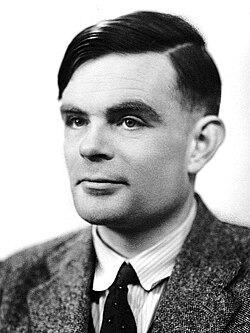
Alan Turing
1912 – 1954
Father of Computing
Proposed the Turing Test. Broke Enigma in WWII. Defined computability itself. Asked the foundational question and gave us the mathematical tools to chase the answer.
"Can a machine think?"
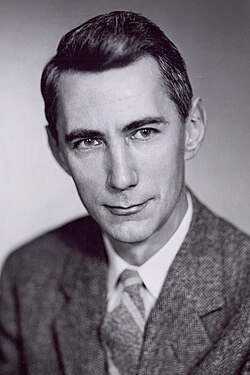
Claude Shannon
1916 – 2001
Father of Information Theory
Defined information mathematically in 1948 with A Mathematical Theory of Communication⬇ PDF. Without his work there is no internet, no digital communication, no AI. Claude the model bears his name.
"Information is the resolution of uncertainty."
🎓
John McCarthy
1927 – 2011
Named the Field
Coined "Artificial Intelligence" at Dartmouth, 1956. Created LISP. Defined the discipline and spent his life advancing it at MIT and Stanford.
"Every aspect of learning can be so precisely described that a machine can simulate it."
🧠
Marvin Minsky
1927 – 2016
MIT AI Lab Co-Founder
Co-founded MIT's AI Lab. Pioneered neural networks and cognitive science. His book The Society of Mind reshaped how we think about intelligence itself.
"You don't understand anything until you learn it more than one way."
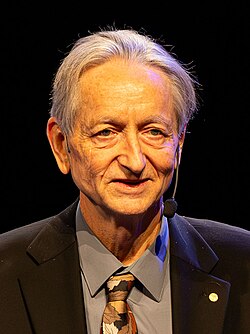
Geoffrey Hinton
1947 –
Godfather of Deep Learning
Championed neural networks for decades when nobody believed. Backpropagation, Boltzmann machines, deep belief nets. Turing Award 2018. Nobel Prize in Physics 2024. Left Google to speak freely about AI risk.
"The benefits are enormous — if we can avoid the risks."
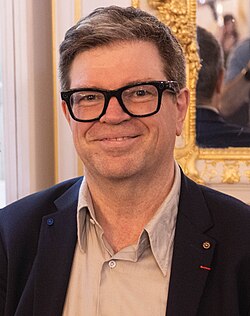
Yann LeCun
1960 –
Father of CNNs
Invented Convolutional Neural Networks — the architecture behind all computer vision. Chief AI Scientist at Meta. Believes world models, not transformers, are the true path to intelligence.
"The brain is the most efficient computing machine we know of."
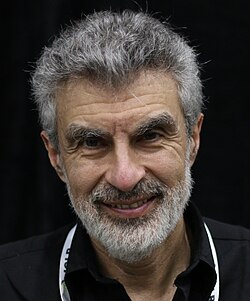
Yoshua Bengio
1964 –
Deep Learning Pioneer
One of three Godfathers of Deep Learning. Turing Award 2018. Advocates globally for AI safety, ethics, and ensuring AI benefits reach all of humanity, not just corporations.
"AI should benefit everyone, not just a few corporations."
🔁
Jürgen Schmidhuber
1963 –
Inventor of LSTM
Invented Long Short-Term Memory networks — enabling AI to process sequences over time. His work underlies a decade of speech recognition, translation, and language modeling before transformers arrived.
"The history of AI is a history of ignoring credit."
🎮
Richard Sutton
1956 –
Father of Reinforcement Learning
Defined and formalized reinforcement learning. His Bitter Lesson: general methods that scale always beat clever domain-specific hacks. This has been proven right, repeatedly, for 40 years.
"The history of AI is the history of learning that scale wins."
🔮
Ilya Sutskever
1986 –
OpenAI Co-Founder
Co-invented AlexNet. Co-founded OpenAI. Led the teams that built GPT-2, GPT-3, GPT-4, DALL-E, and Codex. Departed to found Safe Superintelligence Inc. Believes deeply in what's coming.
"We may be building something smarter than humans. We should think hard about that."
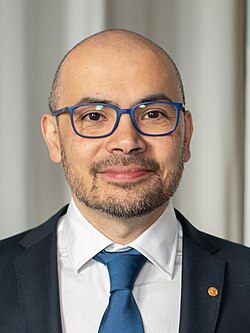
Demis Hassabis
1976 –
DeepMind CEO
Founded DeepMind. Built AlphaGo (beat world Go champion), AlphaFold (solved protein folding — a 50-year biology problem). Nobel Prize in Chemistry 2024. Proof that AI accelerates science itself.
"I want to use AI to accelerate scientific discovery for all of humanity."
📐
Vaswani, Shazeer et al.
2017
Inventors of the Transformer
Eight researchers at Google Brain published "Attention Is All You Need." Every major AI model today — GPT, Claude, Gemini, Llama — descends directly from this single paper. Eight pages that changed everything.
"Attention is all you need."
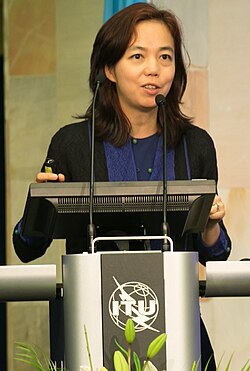
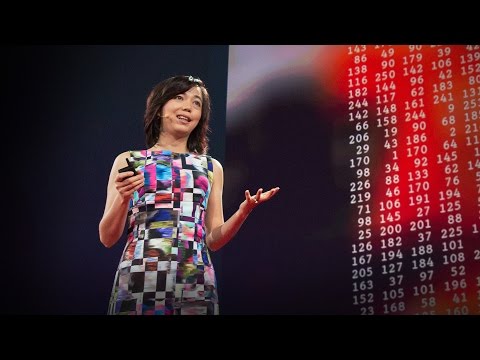
Fei-Fei Li
1976 –
Creator of ImageNet
Built ImageNet — the 1.2 million image dataset that made deep learning work for vision. Co-Director of Stanford HAI. Relentless advocate for human-centered AI and diversity in the field.
"AI is a human story. It should benefit all of humanity."
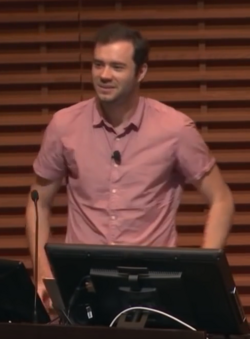
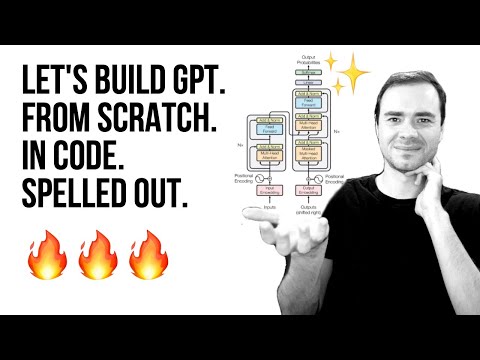
Andrej Karpathy
1986 –
Educator & Pioneer
Led AI at Tesla (Autopilot). Core team at OpenAI for GPT and vision. His YouTube lectures have taught a generation to understand neural networks from raw first principles. The field's greatest teacher.
"Neural nets are not magic. They are matrix multiplication and nonlinearities, trained on data."
Anthropic Co-Founders
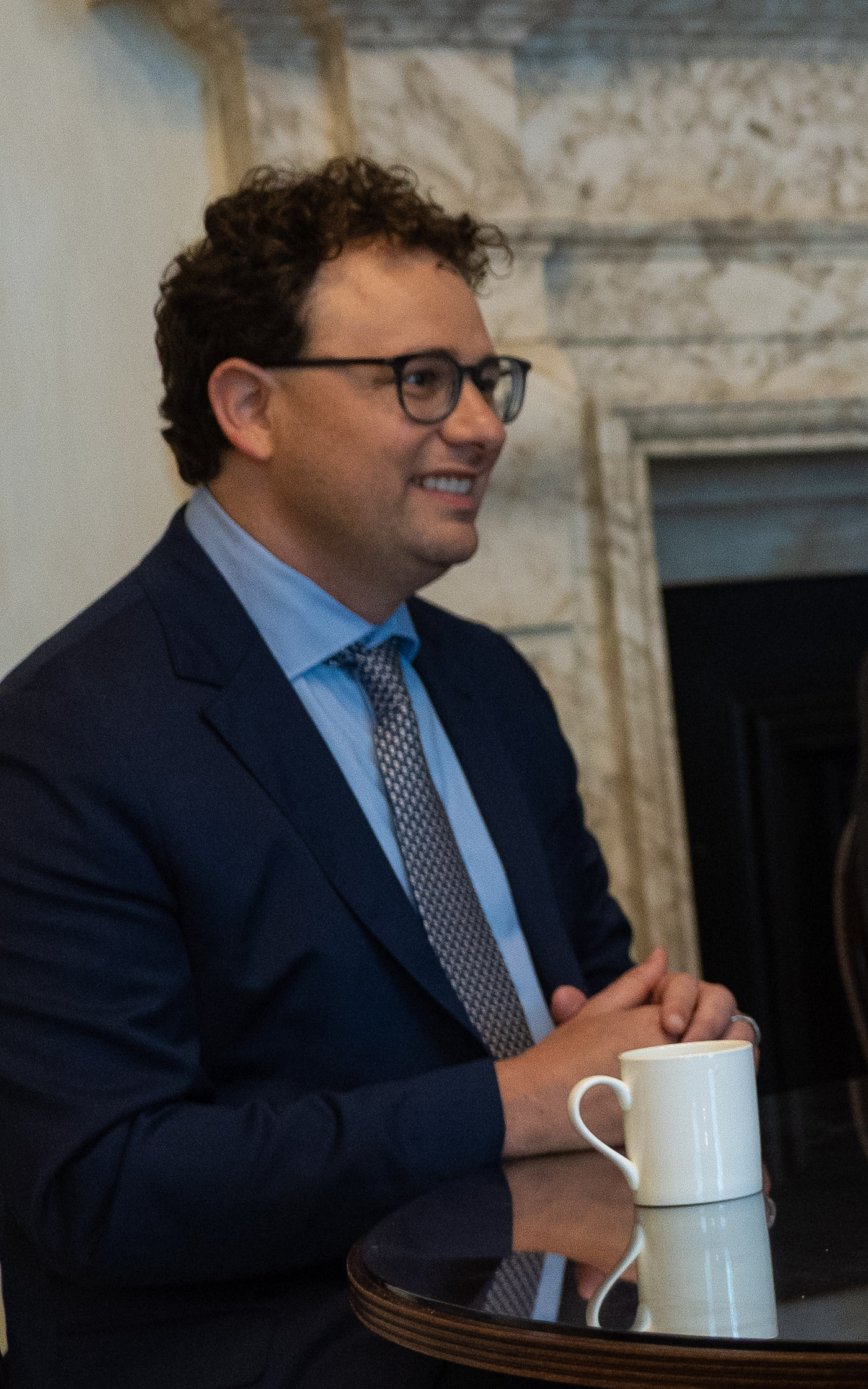
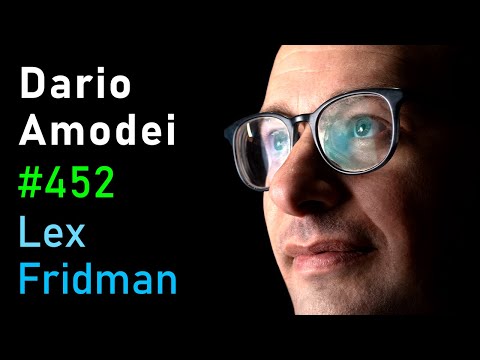
Dario Amodei
CEO & Co-Founder, Anthropic
Physicist by training. VP of Research at OpenAI, where he led the teams that built GPT-2 and GPT-3. In 2021 he and Daniela led seven colleagues out to found Anthropic — driven by the conviction that the most powerful AI systems in history needed safety baked in from day one, not bolted on afterward.
He developed Constitutional AI — training Claude to critique its own outputs against a written set of principles. He believes AI's impact on civilization will be comparable to the Industrial Revolution, and that getting it right is the defining challenge of this generation.
He developed Constitutional AI — training Claude to critique its own outputs against a written set of principles. He believes AI's impact on civilization will be comparable to the Industrial Revolution, and that getting it right is the defining challenge of this generation.
"The most important thing is not to be the first to build powerful AI — it's to be the ones who build it right."
🌟
Daniela Amodei
President & Co-Founder, Anthropic
VP of Operations at OpenAI before co-founding Anthropic with her brother. While Dario leads research, Daniela runs everything that makes Anthropic actually work — operations, go-to-market, hiring, culture, and the commercial strategy that funds the safety mission.
She is the reason Claude exists in the world rather than just in a research paper. Her operational discipline turned a safety-first research lab into a globally influential AI company without compromising the mission. The force multiplier behind everything Anthropic has shipped.
She is the reason Claude exists in the world rather than just in a research paper. Her operational discipline turned a safety-first research lab into a globally influential AI company without compromising the mission. The force multiplier behind everything Anthropic has shipped.
"Safety and capability are not in opposition — we're proving that every day."